

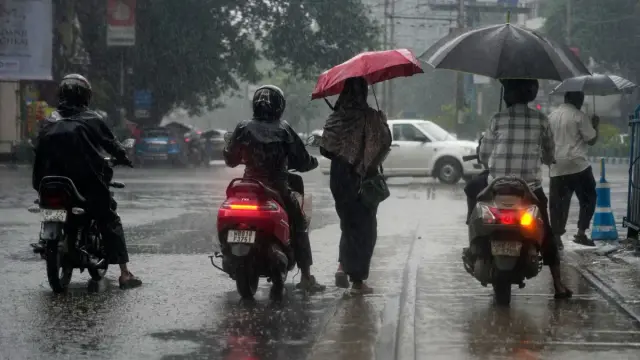

The today weather forecast helps people make practical decisions about travel, work, outdoor activities, clothing, commuting, and daily routines. Instead of simply checking whether the day will be sunny or rainy, a useful forecast provides several details, including temperature, humidity, wind speed, cloud cover, rainfall probability, and the expected changes throughout the day.
Weather conditions can change considerably between morning and evening. A comfortable morning may become hot in the afternoon, while cloudy conditions can develop into rain later. Understanding how to read these changes makes forecasts more useful and helps people prepare rather than react to unexpected conditions.
What a Daily Weather Forecast Tells You
A daily forecast usually combines several atmospheric measurements into an easy-to-understand overview. Temperature is one of the most noticeable elements, but it is only part of the picture. The expected high and low temperatures show the general range, while hourly forecasts explain how conditions may develop.
The today weather information can also include precipitation, wind direction, humidity, visibility, cloud cover, and atmospheric pressure. Each measurement provides a different piece of information.
For example, a day with a high temperature of 30°C may feel very different when humidity is high compared with a dry day at the same temperature. Similarly, moderate wind can make an otherwise warm afternoon feel cooler.
Why Morning, Afternoon, and Evening Conditions Matter
Looking only at the daily high temperature can lead to an incomplete understanding of conditions. Temperatures often change throughout the day because sunlight, cloud cover, wind, and local geography influence the atmosphere.
Morning conditions may be cooler and more humid, particularly during certain seasons. Afternoon temperatures commonly reach their daily peak after several hours of solar heating. In the evening, temperatures generally begin to decline, although cloud cover and wind can affect how quickly that happens.
The today weather forecast becomes more useful when people compare these different periods instead of relying on a single daily temperature.
A commuter, for instance, may leave home early when temperatures are comfortable but return during a much warmer afternoon. Someone planning an outdoor event may need to consider not just the temperature but also the possibility of rain or strong winds later.
Key Elements to Check Before Leaving Home
A quick weather check does not need to take long. Several important indicators can provide a reliable overview of the day.
| Weather Factor | What It Indicates | Why It Matters |
|---|---|---|
| Temperature | Expected warmth or cold | Helps with clothing and comfort |
| Rain Probability | Chance of precipitation | Useful for travel and outdoor plans |
| Humidity | Amount of moisture in the air | Affects how warm conditions feel |
| Wind Speed | Movement of air | Important for travel and outdoor activities |
| Cloud Cover | Amount of visible cloud | Influences sunlight and temperature |
| Visibility | How clearly distant objects can be seen | Relevant for driving and travel |
Checking these factors together gives a more complete picture than looking at temperature alone. The same approach can be applied whether someone is planning a short commute or an entire day outdoors.
How Temperature and Feels-Like Temperature Differ
One of the most confusing parts of a forecast is the difference between actual temperature and perceived temperature. A thermometer may record a particular temperature, while the human body experiences something different because of humidity and wind.
On humid days, reduced evaporation of sweat can make warm air feel more uncomfortable. During cooler and windy conditions, moving air can increase the rate at which heat leaves the body, making the environment feel colder.
This is why the today weather forecast may show both an actual temperature and a “feels like” value. The second figure can be especially useful when deciding what to wear or how long to remain outdoors.
Understanding Rain Chances More Carefully
Rain probability is another forecast element that is frequently misunderstood. A percentage associated with precipitation represents the likelihood of measurable precipitation under the forecast conditions; it should not automatically be interpreted as the percentage of the day that will be rainy.
For daily planning, it is useful to combine precipitation probability with hourly timing. A moderate chance of rain early in the morning may have a different practical effect from the same probability during an afternoon commute.
The today weather outlook can also indicate the expected form of precipitation. Depending on the location and season, forecasts may mention rain, thunderstorms, drizzle, snow, sleet, or other conditions.
People planning outdoor activities should therefore look beyond a single percentage and consider the expected timing, duration, and intensity.
The Role of Wind in Daily Conditions
Wind can significantly influence how a day feels. Light breezes may make warm conditions more pleasant, while stronger winds can create discomfort, blow dust around, affect cycling, or make certain outdoor activities difficult.
Wind direction can also provide useful information. Changes in wind may accompany shifts in temperature, cloud cover, or atmospheric conditions.
For drivers, cyclists, pedestrians, and people working outdoors, wind speed can sometimes be as relevant as temperature. Those using umbrellas should also consider gusts rather than relying only on the average wind speed.
Humidity, Clouds, and Visibility
Humidity describes the amount of water vapor present in the atmosphere. High humidity can make warm weather feel heavier, while lower humidity can make hot conditions feel drier.
Cloud cover affects how much sunlight reaches the surface. Thick clouds can reduce daytime heating, while clearer skies may allow stronger solar warming. Clouds can also be associated with developing precipitation systems, although cloudiness alone does not guarantee rain.
Visibility is particularly important for transportation. Fog, heavy rain, dust, and other atmospheric conditions can reduce the distance at which objects can be clearly seen.
Together, these factors help explain why the today weather may feel different from what a simple temperature reading suggests.
Using Hourly Forecasts for Better Planning
Hourly forecasts are particularly helpful when the weather is expected to change during the day. Instead of making decisions based on the daily summary alone, users can identify periods when conditions are most suitable for specific activities.
For example, someone planning a walk may prefer a cooler period with lower precipitation risk. A traveler can check conditions around the expected departure and arrival times. A person organizing outdoor work can compare temperature, wind, and rainfall across several hours.
The today weather forecast is therefore most useful when it is connected to a person’s actual schedule.
Weather Changes and Forecast Updates
Forecasts are not permanent predictions. Atmospheric conditions are continuously changing, and forecasting systems update their calculations as new observations become available.
This means checking an earlier forecast and assuming it will remain unchanged throughout the day may not always provide the most accurate picture. Short-term forecasts can become more useful as the forecast period approaches, particularly when weather systems are developing or moving quickly.
For this reason, checking an updated forecast before an important journey or outdoor event is a sensible habit.
Adapting Plans to Different Weather Conditions
Different conditions call for different forms of preparation. On hot days, people may choose breathable clothing, carry water, and avoid unnecessary exposure during the hottest period. During rainy conditions, waterproof clothing and suitable footwear can make commuting easier.
When strong winds are expected, securing loose outdoor objects and allowing additional travel time may be useful. During colder conditions, layered clothing can provide flexibility as temperatures change.
The today weather forecast can support these decisions without requiring complicated meteorological knowledge.
Using Weather Information for Travel
Travel planning benefits from looking at several weather indicators together. Road users may need to consider rainfall, visibility, wind, and possible changes in road conditions. Air travelers may encounter weather-related delays or changes in operating conditions, although the exact effect depends on the airport, aircraft operations, and wider circumstances.
For longer journeys, checking conditions at both the departure and destination locations is more informative than examining only one place. Weather can vary considerably over relatively short distances.
The today weather report can therefore serve as a starting point for more detailed travel preparation.
Making Weather Checks a Simple Daily Habit
A practical routine can make weather information easier to use. Start by checking the current conditions, then review the expected temperature range and hourly forecast. Next, look for precipitation, wind, and any notable weather alerts relevant to the area.
A useful daily checklist includes:
- Check current temperature and feels-like conditions.
- Review hourly rain and thunderstorm possibilities.
- Look at wind speed and expected changes.
- Consider humidity and visibility when relevant.
- Recheck the forecast before important outdoor plans.
This approach takes only a short time while providing considerably more context than checking a single temperature number.
Conclusion
Understanding today weather is about more than knowing whether the sky will be sunny or cloudy. Temperature, precipitation, humidity, wind, cloud cover, and visibility all contribute to the conditions people experience throughout the day. Looking at these elements together makes forecasts more practical and easier to apply to everyday decisions.
A good weather-checking routine should focus on the timing of conditions as well as their intensity. By reviewing updated forecasts, comparing hourly changes, and considering personal activities, people can make better-informed plans for commuting, travel, work, exercise, and outdoor events. Weather will always involve some uncertainty, but understanding the information available can make daily planning more prepared and flexible.