

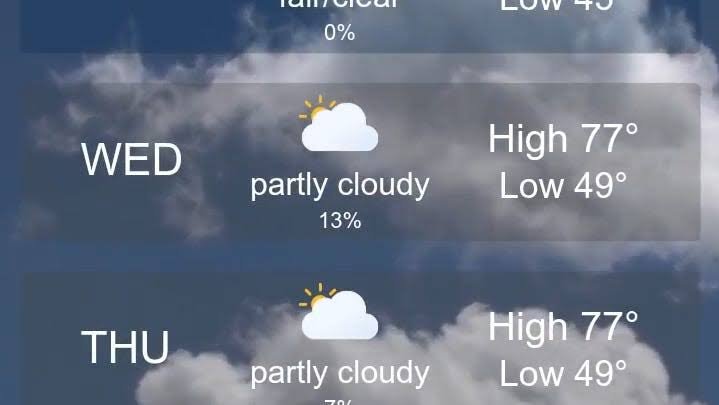

A weather report is an important source of information that helps people understand atmospheric conditions at a particular place and time. It may describe temperature, rainfall, humidity, wind, cloud cover, visibility, and other conditions, while many everyday reports also provide information about what weather is expected next. In technical terms, a report can refer to observations recorded at a specific place and time, whereas a forecast focuses on likely future conditions.
Weather affects almost every part of daily life. A sunny morning can make outdoor travel comfortable, while heavy rain can change commuting plans within minutes. Farmers, pilots, sailors, construction workers, event organizers, drivers, and families all benefit from timely weather information. Instead of simply looking at the sky and guessing what may happen, people can use collected atmospheric data to make more informed decisions. Modern forecasting combines observations, scientific knowledge, computer models, and professional interpretation to estimate upcoming conditions.
What Is a Weather Report?
A weather report provides a structured description of atmospheric conditions for a particular location and period. Depending on the source, it may contain current observations, short-term forecasts, warnings, or a combination of these details. Common information includes minimum and maximum temperature, chances of precipitation, wind speed, wind direction, humidity, cloud conditions, and visibility.
The difference between an observation and a forecast is useful to understand. An observation tells us what is happening or what was measured at a specific time, while a forecast estimates what atmospheric conditions are likely to occur later. Everyday television, radio, and online reports frequently combine both forms of information so that people can understand current conditions and prepare for the hours or days ahead.
Main Information Found in Weather Updates
A detailed report can contain several measurements that describe the atmosphere. Temperature is usually one of the first details people check because it helps them understand whether conditions are likely to feel hot, cool, or cold. Humidity provides information about the amount of moisture in the air and can influence how comfortable a particular temperature feels.
Rainfall information is equally valuable, especially for commuters, farmers, travelers, and outdoor event organizers. Wind speed and direction can provide clues about changing conditions and become particularly important during storms or strong weather systems. Cloud cover and visibility also help explain what people may experience during the day.
| Weather Element | What It Tells You | Why It Matters |
|---|---|---|
| Temperature | How warm or cool the air is | Clothing, travel, health and energy use |
| Rainfall | Expected or observed precipitation | Travel, farming and outdoor activities |
| Humidity | Moisture present in the air | Comfort and atmospheric conditions |
| Wind | Speed and direction of air movement | Travel, aviation and outdoor safety |
| Cloud Cover | Amount of cloud in the sky | Sunshine, rain chances and visibility |
| Visibility | How clearly distant objects can be seen | Driving, aviation and transportation |
How Weather Forecasts Are Prepared
Modern forecasting begins with information collected from many observation systems. Weather stations can measure atmospheric conditions near the ground, while other technologies provide information about conditions higher in the atmosphere. Forecasting systems use these observations to understand the current state of the atmosphere.
Computer-based numerical models then process enormous quantities of information to estimate how atmospheric conditions may develop. Meteorologists interpret the model results and consider local conditions, previous forecast performance, and changing weather patterns. Forecasting is not simply a matter of asking a computer what will happen; professional interpretation remains an important part of the process.
Because the atmosphere is constantly changing, forecasts are not perfectly certain. Small differences in current atmospheric conditions can influence what happens later. Forecasts generally become more dependable when the predicted period is closer to the present, while uncertainty tends to increase farther into the future. Using multiple models and comparing their results can help forecasters assess confidence in a prediction.

Why Weather Information Matters Every Day
People often check the forecast before leaving home because weather conditions can influence simple decisions. Someone planning a morning walk may choose a different time if rain is expected. A family arranging an outdoor celebration may prepare an alternative location. A commuter may allow additional travel time when strong rain or poor visibility is anticipated.
The value becomes even greater when weather can create dangerous conditions. Severe storms, strong winds, flooding, extreme temperatures, and other hazards can affect communities and infrastructure. Timely warnings give people an opportunity to adjust plans, protect property, and follow appropriate safety instructions. Weather forecasts and warnings therefore have practical importance far beyond deciding whether to carry an umbrella.
Weather Reports and Agriculture
Agriculture depends heavily on atmospheric conditions. Farmers need to consider rainfall, temperature, humidity, wind, and longer-term patterns when planning many agricultural activities. Planting, irrigation, harvesting, spraying, and crop protection can all be affected by changing weather.
Reliable information can help farmers decide when outdoor work is more suitable and when precautions may be necessary. Heavy rainfall can create waterlogging, while prolonged dry conditions can increase irrigation requirements. Sudden storms may also affect crops and agricultural equipment.
A forecast does not remove uncertainty, but it gives farmers additional information for making practical decisions. When combined with local knowledge, soil conditions, crop requirements, and agricultural advice, weather information can become an important planning tool.
Importance for Travel and Transportation
Travel plans can change significantly because of atmospheric conditions. Drivers may encounter reduced visibility during heavy rain or fog, while strong winds can create difficulties for certain vehicles. Travelers therefore benefit from checking conditions before starting long journeys.
Aviation and marine transportation require particularly detailed atmospheric information. Pilots and flight planners need information about conditions such as wind, visibility, cloud cover, precipitation, and other operational factors. Specialized aviation reports provide observations in standardized formats for this purpose.
For ordinary travelers, a simple forecast can still provide useful guidance. Checking expected conditions before a road trip can help people prepare suitable clothing, plan stops, consider alternate routes, and avoid unnecessary exposure to severe weather.
Weather Reports and Outdoor Activities
Outdoor activities are closely connected to weather. Sports competitions, hiking trips, weddings, picnics, festivals, photography sessions, and recreational activities can all be influenced by temperature, rain, wind, and storms.
A weather report allows organizers and participants to make decisions before conditions become uncomfortable or unsafe. A forecast showing a high probability of rain may encourage organizers to arrange temporary shelters or move an event indoors. Likewise, information about high temperatures can encourage people to schedule demanding outdoor activities during cooler periods.
This does not mean every forecast should be treated as a guaranteed outcome. Weather information describes expected conditions and levels of uncertainty. People should continue monitoring updated information when conditions are changing quickly.
Understanding Rain Probability
One commonly misunderstood part of a weather report is the probability of precipitation. A percentage does not necessarily mean that rain will continue for that exact percentage of the day or cover that exact percentage of the location. It communicates the likelihood of measurable precipitation according to the forecast methodology.
For example, a stated chance of rain should not automatically be interpreted as certainty that every person in the area will experience rainfall. Weather conditions can vary considerably across short distances, especially during showers and thunderstorms. Official weather guidance emphasizes that probabilities can be misunderstood when they are presented as absolute predictions.
Understanding this distinction helps people make better decisions. Instead of asking only whether rain is predicted, it can be useful to consider the timing, intensity, expected coverage, and accompanying warnings.

How to Read a Daily Weather Update
Reading a weather report does not have to be complicated. Start with the current temperature and expected high and low temperatures. Then check precipitation information to determine whether rain or other forms of precipitation are expected.
Next, look at wind conditions, particularly if you are planning travel, outdoor sports, boating, cycling, or another activity affected by strong winds. Humidity can help explain why a warm day may feel especially uncomfortable. Finally, check for weather alerts or warnings because these may be more important than ordinary temperature information.
Useful points to check include:
- Current and expected temperature
- Chance and timing of rainfall
- Wind speed and direction
- Humidity levels
- Cloud conditions
- Visibility
- Severe weather warnings
- Forecast changes throughout the day
Technology Is Changing Weather Forecasting
Weather forecasting has developed significantly as observation technology and computing capabilities have improved. Earlier forecasting methods relied heavily on direct observations and relatively simple indicators. Today, forecasting systems can process extensive atmospheric information and use sophisticated numerical models.
Satellites, radar systems, automated weather stations, ocean observations, and other technologies contribute information that helps meteorologists understand atmospheric behavior. Modern computing allows complex calculations to be performed rapidly, supporting forecasts across different time scales and geographic areas.
However, technology does not make forecasting infallible. The atmosphere is a complex system, and limitations in observations, scientific understanding, and computer processing can contribute to uncertainty.
Weather Information for Emergency Preparedness
During severe weather, timely information can become especially important. Communities may need to respond to heavy rainfall, strong winds, flooding, extreme heat, storms, or other hazards. Authorities can use forecasts and warnings to communicate potential risks and recommend appropriate precautions.
Individuals can also use reliable information to prepare their homes, adjust travel plans, protect outdoor belongings, and stay informed. The most useful approach is to pay attention to official warnings rather than relying only on informal messages or unverified social media posts.
A good weather report should therefore be viewed as a decision-support tool. It helps people understand atmospheric conditions, recognize possible changes, and prepare appropriately rather than simply satisfying curiosity about tomorrow’s temperature.
Choosing Reliable Weather Information
With so many weather websites, apps, television channels, and social media accounts available, selecting dependable information is important. Users should prefer established meteorological agencies and reputable forecasting services, especially when severe weather is involved.
It is also helpful to check when the information was updated. Weather conditions can change, and an old forecast may no longer represent the latest situation. Comparing current observations with the forecast can also provide useful context.
For important travel, work, or safety decisions, users should pay particular attention to official warnings and alerts. A forecast is most valuable when it is current, clearly presented, and interpreted in the context of the local situation.
The Future of Weather Forecasting
The future of forecasting will likely involve continued improvements in observation systems, computing, modeling, and communication. More detailed data can help forecasting systems identify atmospheric patterns, while advanced computing can process increasingly complex simulations.
Artificial intelligence and machine-learning techniques are also becoming areas of interest in weather prediction and data analysis. Their potential lies in helping researchers process large datasets, identify patterns, and improve certain forecasting tasks. Human expertise will remain important because weather prediction involves uncertainty, local effects, and decisions about how information should be communicated.
The goal is not simply to create longer forecasts but to make forecasts more useful, understandable, timely, and relevant to real-world decisions.
Conclusion
A weather report is much more than a daily temperature update. It brings together observations and forecasts that help people understand atmospheric conditions and prepare for possible changes. From agriculture and transportation to travel, outdoor activities, emergency planning, and everyday routines, weather information influences countless decisions.