



Knowing the weather today can help you make better decisions about travel, work, outdoor activities, clothing, and daily routines. A weather update is more than simply checking whether the sky is sunny or cloudy. It can include temperature, humidity, rainfall probability, wind speed, air pressure, visibility, and other atmospheric conditions that influence how the day feels.
Weather can change considerably from one location to another, even within the same city or region. A morning may begin with clear skies and develop thunderstorms later, while coastal areas can experience different conditions from nearby inland locations. Understanding the information behind a forecast makes it easier to interpret changing conditions and plan accordingly.
What Does Weather Today Actually Tell You?
A current weather report provides information about atmospheric conditions at a particular place and time. Depending on the service being used, it may show the present temperature, feels-like temperature, cloud cover, precipitation, wind direction, humidity, and visibility.
The most useful part of a weather report is often the combination of current conditions and the hourly forecast. Current information tells you what is happening now, while hourly predictions indicate how conditions may develop during the rest of the day.
For example, a temperature of 28°C may appear comfortable, but high humidity can make it feel considerably warmer. Similarly, a relatively mild temperature combined with strong wind can make outdoor conditions feel cooler than expected.
Key Elements to Check in a Daily Weather Report
Understanding individual weather indicators can make forecasts much easier to read. Each measurement provides a different piece of information.
| Weather factor | What it indicates | Why it matters |
|---|---|---|
| Temperature | How warm or cold the air is | Helps with clothing and activity planning |
| Feels-like temperature | Perceived warmth or cold | Accounts for humidity, wind, and other effects |
| Precipitation chance | Likelihood of measurable precipitation | Useful for outdoor plans and travel |
| Humidity | Amount of moisture in the air | Influences comfort and heat perception |
| Wind speed | How quickly air is moving | Important for travel and outdoor activities |
| Wind direction | Where the wind is coming from | Helps understand changing conditions |
| Cloud cover | Amount of sky covered by clouds | Can affect sunlight and temperature |
| Visibility | How far you can see clearly | Important for driving and aviation |
| Air pressure | Atmospheric pressure at a location | Can help identify changing weather patterns |
Looking at these factors together provides a more complete picture than relying on temperature alone.
Why Temperature Is Not the Whole Story
Temperature is one of the first things people check, but it does not always describe how the weather will feel. The human body responds to several environmental factors simultaneously.
Humidity can make warm conditions feel uncomfortable because moisture in the air reduces the efficiency of evaporation from the skin. Wind can have the opposite effect by increasing heat loss from the body. During colder periods, strong winds can therefore make outdoor conditions feel significantly colder.
The “feels-like” temperature attempts to communicate this perceived experience. It is particularly useful during periods of intense heat or cold because it provides additional context beyond the actual air temperature.
How to Interpret Rain and Thunderstorm Forecasts
Rain forecasts require some careful interpretation. A precipitation percentage generally represents the probability of precipitation occurring at the specified location and time period. It should not automatically be interpreted as the percentage of the day that will be rainy or the percentage of an area that will receive rain.
Hourly information can be especially useful. If rainfall is expected primarily in the afternoon, someone planning an outdoor activity in the morning may be able to adjust their schedule rather than cancel the entire day.
Thunderstorm forecasts deserve additional attention because storms can bring lightning, heavy rainfall, strong winds, and occasionally hail. When severe weather is possible, checking updated forecasts and official warnings is more important than relying on an earlier prediction.
Using Hourly Forecasts for Better Planning
An hourly forecast can be more practical than a general daily summary. Conditions can change significantly throughout a single day, particularly during transitional seasons or periods of unstable weather.
Suppose the morning is expected to be dry, temperatures rise around midday, and rainfall becomes more likely later. That information can influence when you commute, exercise, shop, travel, or organize an outdoor event.
When checking an hourly forecast, pay attention to:
- Temperature changes throughout the day
- Expected precipitation and its timing
- Wind speed and direction
- Cloud cover and sunlight
- Humidity and feels-like conditions
Combining these details creates a clearer picture of how the day may develop.
How Location Changes Weather Conditions
Weather is highly dependent on geography. Two locations that are relatively close together can experience different temperatures or precipitation because of elevation, proximity to water, vegetation, urban development, and local terrain.
Cities can also develop their own microclimates. Buildings and paved surfaces may retain heat, while parks and greener areas can feel different. Mountains can influence rainfall and wind patterns, and coastal regions may experience maritime effects that moderate temperatures.
For this reason, it is important to check the forecast for your actual location rather than relying on a report for a nearby city.
Weather Today and Travel Planning
Checking weather conditions before traveling can reduce avoidable problems. Short trips may require little preparation, but longer journeys can involve several different weather patterns.
Drivers should consider visibility, rainfall, strong winds, and road conditions. Heavy rain can reduce visibility and increase the risk of slippery roads, while fog can create additional challenges during early morning travel.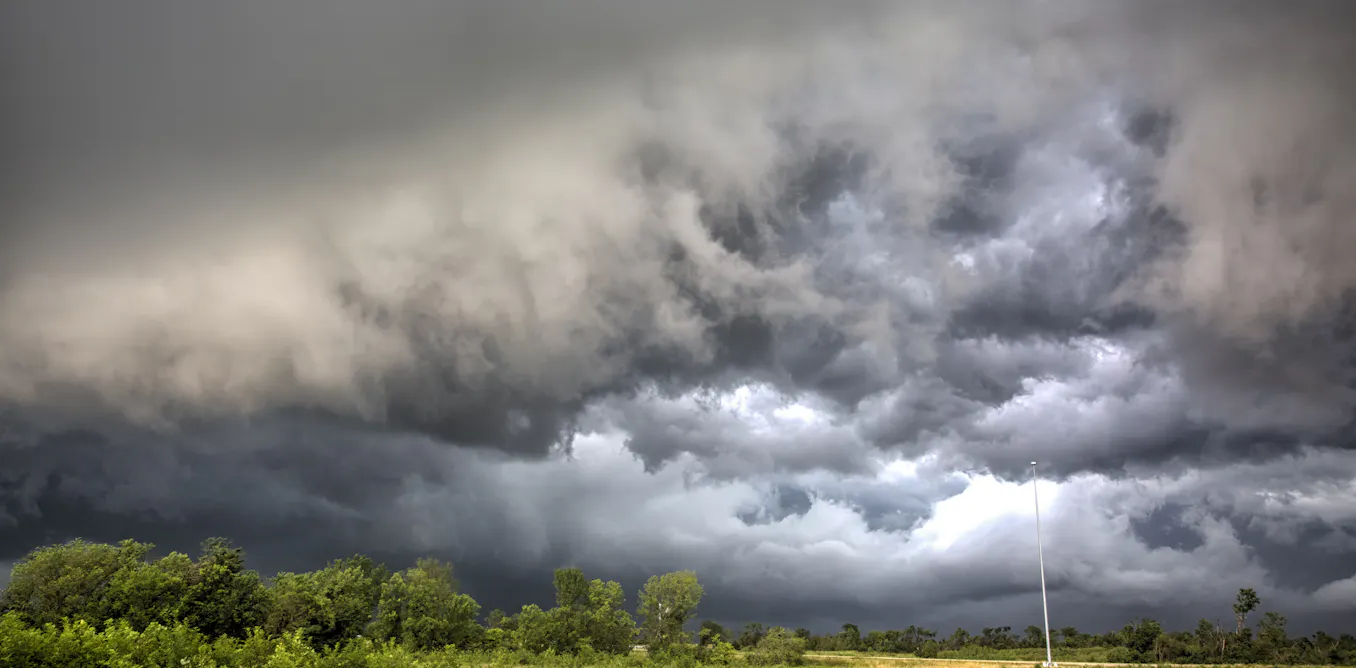
For air travel, weather can also affect airport operations. Thunderstorms, strong winds, low visibility, and other atmospheric conditions may contribute to delays or operational changes.
Travelers should therefore review updated conditions close to departure rather than depending exclusively on a forecast checked many hours earlier.
How Weather Forecasts Are Created
Modern forecasting combines observations, computer models, historical information, satellite data, radar measurements, and readings from weather stations. Meteorologists use these sources to understand the current state of the atmosphere and estimate how it may evolve.
Forecast models divide the atmosphere into computational grids and calculate how temperature, pressure, moisture, wind, and other variables may change. Because the atmosphere is complex, forecasts become less certain as the prediction period extends further into the future.
This is why a short-term forecast is generally more useful for immediate decisions than a prediction several weeks ahead.
How Accurate Is a Weather Forecast?
No weather forecast is guaranteed to be perfect. Forecast accuracy depends on location, weather conditions, prediction range, and the complexity of atmospheric changes.
Stable weather patterns are usually easier to predict than rapidly developing storms. A forecast may indicate generally dry conditions while a localized shower develops unexpectedly in one neighborhood.
For important plans, checking the forecast more than once is a sensible approach. The closer an activity gets, the more useful current observations, radar information, and official alerts can become.
Best Ways to Check Weather Today
There are several practical ways to stay informed about current conditions. Weather applications can provide location-based forecasts, hourly updates, radar maps, notifications, and severe-weather alerts.
For important safety decisions, official meteorological agencies and emergency authorities should receive priority because they can provide warnings and advisories relevant to specific regions.
A useful daily routine is to check the current conditions first, review the hourly forecast second, and then look for any active warnings. This approach provides both immediate information and a broader understanding of what may happen later.
Common Mistakes When Reading Weather Information
One common mistake is focusing only on the highest temperature. A forecast showing 35°C does not explain humidity, wind, or exposure to direct sunlight.
Another mistake is treating precipitation probability as a guarantee. A rain probability does not mean that rain will definitely occur at your exact location.
People may also overlook weather warnings because the general forecast appears comfortable. Severe weather can develop even when the overall daily temperature looks ordinary.
Finally, using an outdated forecast can lead to poor decisions. Weather information should be refreshed when conditions are changing quickly or when the activity involves safety.
Making Weather Information Part of Your Daily Routine
A simple weather-checking habit can make everyday planning easier. Before leaving home, review the current temperature, precipitation outlook, wind, and any warnings. For outdoor plans, also consider humidity and feels-like conditions.
During periods of extreme heat, cold, storms, or heavy rainfall, more frequent checks may be appropriate. Weather conditions can change faster than a morning forecast suggests, particularly when atmospheric instability is present.
The goal is not to predict every change but to understand enough information to make sensible decisions.
Conclusion
Understanding the weather today involves much more than checking a single temperature number. Temperature, humidity, precipitation, wind, cloud cover, visibility, and official warnings all contribute to a useful picture of current and expected conditions.
By combining current observations with hourly forecasts and paying attention to local conditions, people can plan commutes, travel, outdoor activities, and everyday tasks more effectively. Forecasts will never eliminate uncertainty completely, but learning how to interpret them can make weather information considerably more useful and practical.