



Introduction
Weather plays an important role in our everyday lives. From deciding what to wear in the morning to planning outdoor activities, travelling, shopping, or managing professional responsibilities, weather conditions influence many daily decisions. People regularly check forecasts to understand whether the next day will bring sunshine, rainfall, cloudy skies, strong winds, or changing temperatures. Having an idea of expected conditions makes it easier to prepare in advance and avoid unnecessary inconvenience. As technology continues to improve, accessing reliable weather information has become easier than ever.
Checking weather tomorrow has become a common habit for students, office workers, business owners, farmers, travellers, and families. A simple forecast can help someone decide whether to carry an umbrella, schedule an outdoor meeting, water agricultural fields, or change travel arrangements. Weather information is no longer limited to television announcements or newspaper reports. Modern forecasting systems provide detailed updates through digital platforms, mobile applications, satellites, and meteorological services. These resources help people understand expected conditions and make informed decisions before starting their day.
However, understanding a forecast involves more than checking whether it will rain or remain sunny. Temperature, humidity, wind speed, atmospheric pressure, cloud cover, and the possibility of thunderstorms all contribute to the overall weather situation. Learning how these elements work together can help individuals interpret forecasts more effectively. This guide explains the importance of daily weather updates, the science behind forecasting, useful weather indicators, and practical ways to prepare for changing conditions.
Why Checking Weather Forecasts Before the Next Day Matters
Planning ahead is one of the simplest ways to manage unexpected situations. Weather conditions can influence transportation, outdoor events, workplace schedules, agricultural activities, and personal routines. Checking a forecast in advance provides an opportunity to make small adjustments that can prevent larger problems. For example, someone planning a family picnic can select an alternative location if rain is expected, while a commuter can allow additional travel time when heavy rainfall or fog is predicted.
Daily forecasts are particularly useful because weather conditions can change significantly within a short period. A morning that begins with clear skies may become cloudy by afternoon, while a warm day can turn cooler after rainfall or strong winds. Understanding these possibilities helps people avoid relying entirely on the conditions they observe at one particular moment. Weather information should therefore be treated as a planning resource rather than simply a description of the present atmosphere.
Another important benefit is safety. Severe thunderstorms, heatwaves, cold waves, strong winds, and heavy rainfall can create challenging conditions. Advance warnings allow people to secure outdoor objects, avoid flooded roads, protect vulnerable individuals, and follow official safety instructions. Although forecasts cannot eliminate every weather-related risk, they provide valuable information that supports better preparation.
Understanding the Main Elements of a Daily Weather Forecast
A weather forecast contains several measurements that describe different aspects of atmospheric conditions. Each measurement provides useful information, but understanding the complete picture requires looking at them together. Temperature indicates how warm or cold the air may feel, while humidity describes the amount of moisture present in the atmosphere. Wind speed explains how quickly air is moving, and precipitation forecasts indicate the possibility and expected amount of rain, snow, or other forms of moisture.
Cloud coverage is another important indicator because it influences sunlight, temperature, and the possibility of rainfall. Atmospheric pressure also helps meteorologists understand developing weather systems. Changes in pressure can provide clues about approaching high-pressure or low-pressure systems, which may influence local conditions. When these factors are analysed together, forecasting services can produce more detailed predictions.
Temperature and Expected Daytime Conditions
Temperature is generally the first detail people notice when reviewing a forecast. It helps individuals understand whether they should expect a comfortable, warm, hot, or cold day. Most daily forecasts provide minimum and maximum temperatures, representing the expected lower and higher readings during a particular period.
For example, a forecast showing a minimum temperature of 18°C and a maximum of 29°C suggests a relatively mild morning followed by warmer afternoon conditions. However, the actual experience can differ depending on sunlight, humidity, wind, and local surroundings. People working outdoors may need to consider these additional factors rather than relying only on the maximum temperature.
Rainfall Probability and Cloud Conditions
Rainfall predictions are especially important for people planning outdoor activities. Forecasts commonly display the probability of precipitation as a percentage. This percentage represents the likelihood of measurable precipitation for a particular location and forecast period, according to the forecasting model.
It does not necessarily mean that the stated percentage of the day will be rainy. For example, a 60% probability of rain does not automatically indicate that rain will continue for 60% of the day. It communicates the likelihood of precipitation occurring under the forecast conditions. Understanding this distinction helps prevent confusion when interpreting daily weather reports.
Humidity and Wind Speed
Humidity affects how people experience temperature. High humidity can make warm conditions feel more uncomfortable because moisture in the air reduces the efficiency of sweat evaporation. In contrast, low humidity can contribute to dry skin, throat irritation, and increased moisture loss.
Wind speed is equally important. A moderate breeze may provide relief during warm conditions, whereas strong winds can create difficulties for cyclists, pedestrians, construction workers, and people travelling on two-wheelers. Wind direction can also help explain changes in local temperature and the movement of weather systems.
Weather Tomorrow and Its Importance for Different Regions
Weather conditions are not identical everywhere. Geography, elevation, distance from the sea, vegetation, and seasonal patterns all influence local atmospheric behaviour. A coastal location may experience humid conditions, while an inland city can experience larger temperature differences between morning and afternoon. Mountainous regions may receive different precipitation patterns compared with nearby plains.
In India, regional differences are particularly noticeable because the country experiences diverse geographical and climatic conditions. Northern regions can experience cold winters and intense summer heat, while coastal areas may remain humid for much of the year. Mountain regions can experience snowfall, rainfall, and sudden temperature changes depending on elevation and season.
For this reason, people should always check forecasts for their particular city or district rather than assuming that a general regional prediction applies everywhere. Even neighbouring locations can experience different rainfall levels because of local atmospheric conditions.
Seasonal Weather Patterns in India
India’s weather is strongly influenced by seasonal changes. The summer season generally brings rising temperatures across many parts of the country, although coastal and mountainous areas may experience different conditions. During this period, heatwaves can affect daily activities, making hydration, shade, and suitable clothing important considerations.
The monsoon season introduces widespread rainfall across different regions. However, the timing, intensity, and duration of rainfall can vary considerably. Some locations receive regular showers, while others may experience short periods of intense precipitation followed by dry intervals. Monitoring daily forecasts becomes particularly useful for transportation, farming, construction, and outdoor planning.
Winter conditions also differ from one region to another. Northern India can experience cold waves, fog, and lower morning temperatures, while southern coastal areas generally remain comparatively warmer. Seasonal weather awareness helps individuals understand why the same forecast values may have different practical effects in different locations.
How Modern Weather Forecasting Works
Weather forecasting is a scientific process that combines observations, mathematical calculations, atmospheric measurements, and computer-based simulations. Meteorological organisations collect information from weather stations, satellites, radar systems, ocean buoys, aircraft, and other observation networks. These measurements help scientists understand current atmospheric conditions and identify patterns that may influence future weather.
Numerical Weather Prediction is one of the major technologies used in modern forecasting. It involves mathematical models that simulate atmospheric processes using physical principles. Computers analyse information about temperature, pressure, moisture, wind, and other variables to estimate how atmospheric conditions may develop over time.
The resulting predictions are interpreted by meteorologists, who consider model performance, regional geography, historical patterns, and newly available observations. Forecasts are then communicated through websites, television broadcasts, mobile applications, and official weather bulletins.
The Role of Satellites and Weather Radar
Weather satellites provide valuable information about cloud formation, atmospheric moisture, storms, and large-scale weather systems. Geostationary satellites continuously observe particular areas of the Earth, while polar-orbiting satellites collect observations across different geographical regions.
Weather radar systems are especially useful for tracking precipitation. They help identify the location, movement, and intensity of rainfall systems. This information can support short-term forecasts and warnings about developing thunderstorms or heavy precipitation.
Together, satellite observations and radar measurements improve the understanding of atmospheric conditions. They are particularly important when weather systems develop rapidly and require frequent monitoring.
Artificial Intelligence in Weather Prediction
Artificial intelligence is becoming an increasingly important part of weather forecasting. Machine learning systems can analyse large collections of historical weather observations and identify patterns that may help improve predictions. Some modern forecasting approaches use AI to process atmospheric information more efficiently and produce predictions for different geographical areas.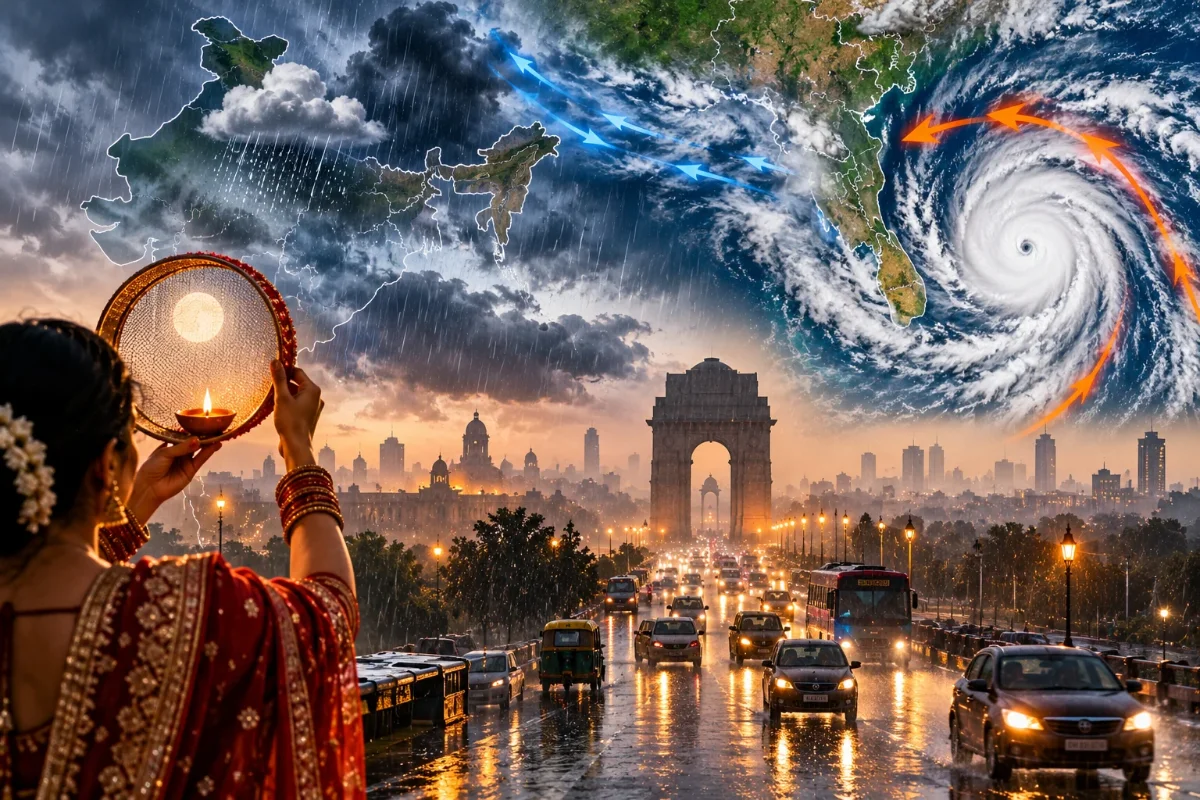
However, AI does not replace all traditional forecasting methods. Physical weather models, scientific observations, meteorological expertise, and verification remain essential. Combining different forecasting approaches can improve understanding, although uncertainty remains an unavoidable part of predicting complex atmospheric behaviour.
Important Weather Indicators and Their Meanings
When reviewing a daily forecast, it is helpful to understand the common terms and measurements used by weather services. The following table explains some important indicators and how they can influence everyday decisions.
| Weather indicator | What it explains | Why it matters |
|---|---|---|
| Temperature | Expected air warmth or coldness | Helps with clothing and outdoor planning |
| Rain probability | Likelihood of precipitation | Helps prepare for possible rainfall |
| Humidity | Moisture present in the air | Influences comfort and heat perception |
| Wind speed | Movement of air | Helps assess outdoor conditions |
| Cloud coverage | Amount of sky covered by clouds | Indicates sunlight and possible weather changes |
| UV index | Strength of ultraviolet radiation | Helps determine sun protection needs |
| Atmospheric pressure | Pressure exerted by the atmosphere | Helps identify developing weather systems |
These indicators should not be considered separately when making important decisions. For example, a moderately high temperature combined with high humidity may feel more uncomfortable than the temperature reading alone suggests. Similarly, light rainfall accompanied by strong winds may create more challenging travel conditions than heavier but calmer rainfall.
How to Use Daily Weather Information for Better Planning
Weather information becomes most useful when it is connected to everyday activities. Instead of checking a forecast only out of curiosity, people can use it to make practical decisions. A student travelling to school may check for rainfall and fog, while an office employee may consider temperature and traffic conditions before leaving home. Families organising outdoor celebrations can review precipitation predictions before finalising arrangements.
People who regularly check weather tomorrow can develop a simple planning routine. Reviewing the forecast in the evening provides an opportunity to prepare clothing, transportation, and necessary supplies. Checking it again in the morning helps identify any updated warnings or changes in expected conditions.
A practical routine may include the following steps:
- Check the expected minimum and maximum temperatures.
- Review rainfall probability and expected precipitation periods.
- Pay attention to wind speed, humidity, and severe weather warnings.
- Prepare suitable clothing and travel arrangements according to the forecast.
This approach does not require advanced meteorological knowledge. A few minutes of preparation can help individuals organise their schedules more confidently.
The Importance of Weather Forecasts for Agriculture and Business
Agriculture is closely connected with changing weather conditions. Farmers depend on rainfall, temperature, humidity, and seasonal patterns when planning irrigation, sowing, harvesting, and crop protection. Unexpected rainfall can affect harvesting schedules, while prolonged dry periods may increase the need for irrigation. Forecast information can therefore help agricultural communities make better operational decisions.
Accurate weather information is also valuable for businesses. Construction companies may need to adjust outdoor work schedules during heavy rainfall or strong winds. Transportation businesses consider visibility, road conditions, and severe weather warnings when organising deliveries. Retailers may also observe how changing temperatures and rainfall influence customer movement and product demand.
For industries that depend on outdoor operations, weather forecasting is more than a convenience. It is an important planning resource that can reduce operational disruptions, improve workplace safety, and support more efficient resource management.
Common Mistakes People Make While Checking Weather Forecasts
Although weather information is widely available, people sometimes misunderstand forecast details or rely on incomplete information. One common mistake is assuming that a forecast for an entire city applies equally to every neighbourhood. Local rainfall, cloud cover, and temperature can vary because of geographical differences and changing atmospheric conditions.
Another mistake is treating long-range predictions as completely certain. Forecast confidence generally decreases as the prediction period becomes longer because atmospheric conditions can change and small errors can influence later calculations. A forecast for the following day is often more useful for immediate planning than a prediction made several weeks in advance.
People should also avoid interpreting rainfall probability incorrectly. A percentage does not automatically indicate how long it will rain or how much precipitation will occur. Reading the complete forecast, including expected timing and rainfall intensity, provides a better understanding of possible conditions.
It is equally important to distinguish between general forecasts and official severe weather alerts. When authorities issue warnings about storms, flooding, heatwaves, or other dangerous conditions, those warnings should receive greater attention than ordinary weather summaries.
How to Prepare for Unexpected Weather Changes
Even advanced forecasting systems cannot predict every local weather development with complete accuracy. Sudden thunderstorms, changing wind patterns, isolated rainfall, and unexpected temperature variations can affect daily plans. Being prepared for reasonable changes is therefore a useful habit.
Preparation depends on the season and local climate. During rainy periods, keeping an umbrella, waterproof footwear, and suitable travel arrangements can make daily movement easier. During hot weather, drinking enough water, wearing lightweight clothing, and limiting unnecessary exposure to direct sunlight can improve comfort.
In colder conditions, suitable clothing and attention to early morning fog can help people manage their routines. Drivers should reduce speed when visibility is poor and maintain additional distance from other vehicles. During severe weather warnings, following official instructions and avoiding unnecessary outdoor movement is particularly important.
A flexible schedule is another effective way to handle uncertain conditions. Outdoor activities can be arranged with alternative indoor options, and important journeys can include additional travel time. These small precautions make it easier to respond when actual conditions differ from the expected forecast.
The Future of Daily Weather Forecasting
Weather forecasting continues to develop through improvements in satellite technology, computer processing, atmospheric observation, and artificial intelligence. These developments are helping meteorological organisations analyse larger amounts of information and produce more detailed predictions. Improved local forecasting may eventually provide more useful information about neighbourhood-level rainfall, changing temperatures, and rapidly developing weather systems.
Mobile technology is also changing how people receive weather information. Instead of depending on a single daily report, users can receive updated forecasts, severe weather notifications, and location-based information throughout the day. These developments make weather awareness more accessible to people with different lifestyles and professional requirements.
Another important development involves climate monitoring. Climate change is influencing temperature patterns, precipitation behaviour, and the frequency or intensity of certain extreme weather events in many regions. Daily forecasting and long-term climate research serve different purposes, but both are important for understanding environmental conditions. Weather forecasts help with immediate decisions, while climate information supports broader planning and adaptation.
Despite technological progress, forecasts will always contain some degree of uncertainty. Responsible weather communication should therefore explain probabilities, possible changes, and warning levels rather than presenting every prediction as a guaranteed outcome.
Conclusion
Weather information has become an essential part of modern daily planning. From personal travel and outdoor activities to agriculture, business operations, and public safety, understanding atmospheric conditions helps people make more informed decisions. Temperature, rainfall probability, humidity, wind speed, cloud coverage, and official warnings all contribute to a clearer picture of expected conditions.
Checking weather tomorrow is a practical habit that allows individuals to prepare for possible changes before beginning their daily activities. Modern forecasting technologies have made weather information more accessible, while satellites, radar systems, numerical models, and artificial intelligence continue to improve prediction capabilities. However, forecasts should always be interpreted with an understanding of their limitations and changing atmospheric conditions.
The best approach is to check reliable local updates, pay attention to important weather indicators, and remain flexible when conditions are uncertain. By developing these simple habits, individuals can manage their schedules more effectively, prepare for seasonal changes, and respond responsibly to unexpected weather situations.