



Weather describes the conditions of the atmosphere at a particular place and time. Temperature, humidity, wind, rainfall, cloud cover, air pressure, and visibility all contribute to what people experience outdoors. These conditions can change within minutes or remain relatively stable for several days, making atmospheric observation important for travel, agriculture, transportation, business, and everyday planning.
Understanding weather is more than checking whether the day will be sunny or rainy. Forecast information can explain temperature changes, the possibility of precipitation, wind strength, humidity levels, and potentially hazardous conditions. With modern observation systems, people can access forecasts for individual hours, several days, or longer periods, although forecast reliability generally decreases as the prediction period becomes longer.
What Is Weather and Why Does It Change?
Weather is the short-term state of the atmosphere. It is influenced by the movement of air masses, solar heating, moisture, pressure differences, terrain, oceans, and seasonal patterns. Because these factors interact continuously, atmospheric conditions are naturally dynamic.
The Sun is a major source of energy driving atmospheric processes. Different parts of Earth receive different amounts of solar energy because of the planet’s shape, rotation, tilt, and position in its orbit. Land and water also heat and cool at different rates. These differences contribute to pressure variations and air movement.
Air generally moves from areas of higher pressure toward areas of lower pressure, while Earth’s rotation affects the direction of large-scale atmospheric circulation. Moisture in the atmosphere can form clouds and precipitation when air rises, cools, and reaches conditions that allow water vapor to condense.
Main Elements Used to Describe Atmospheric Conditions
Several measurements work together to provide a complete picture of current conditions. Temperature indicates how warm or cold the air is, while humidity describes the amount of water vapor present relative to the air’s capacity to hold moisture.
Atmospheric pressure is another important measurement. Changes in pressure can be associated with the movement of weather systems and shifts in atmospheric stability. Wind speed and direction reveal how air is moving, while cloud cover provides information about conditions in the atmosphere.
Precipitation includes rain, snow, sleet, and hail. Visibility can also become important when fog, dust, heavy rain, or snow reduces the distance people can clearly see. Forecast services combine these measurements to create a more detailed understanding of atmospheric conditions.
| Element | What It Measures | Why It Matters |
|---|---|---|
| Temperature | Degree of warmth or cold | Clothing, health, agriculture, energy use |
| Humidity | Moisture in the air | Comfort, clouds, precipitation |
| Air pressure | Force exerted by the atmosphere | Tracking atmospheric systems |
| Wind | Speed and direction of air movement | Travel, aviation, storms, outdoor activity |
| Precipitation | Rain, snow, sleet, or hail | Water supply, farming, transport |
| Cloud cover | Amount and type of clouds | Sunshine, rainfall potential, visibility |
How Forecasts Are Created
Forecasting combines observations, scientific models, historical information, and expert analysis. Weather stations collect measurements from the surface, while satellites monitor clouds, atmospheric moisture, and large-scale systems from space. Radar systems can track precipitation and provide valuable information about developing storms.
Meteorological balloons are also used to measure conditions at different heights in the atmosphere. Aircraft and ocean-based instruments can contribute additional observations, especially in regions where surface measurements are limited.
Computer-based numerical models then process enormous quantities of atmospheric data. These models use mathematical equations describing physical processes to estimate how atmospheric conditions may develop. Forecasters examine model output alongside current observations before producing forecast products.
No forecast can provide perfect certainty because the atmosphere is a complex system. Small differences in initial conditions can sometimes produce noticeably different outcomes later, particularly during rapidly changing situations.
Understanding Different Forecast Time Frames
A forecast is generally more useful when its time frame is understood correctly. Short-range predictions often provide detailed information about conditions expected over the next several hours or days. These forecasts are particularly useful for daily activities and immediate travel decisions.
Medium-range forecasts extend farther into the future and can help with general planning. However, specific details such as the exact timing of rainfall or the precise temperature may change as new observations become available.
Longer-range outlooks are better understood as broad indications of possible patterns rather than guarantees for a particular location on a particular day. Forecast users should therefore pay attention to updates instead of relying on an older prediction.
Why Local Conditions Can Differ
Conditions can vary significantly between nearby locations. Elevation, vegetation, buildings, coastlines, mountains, and large bodies of water can all influence local atmospheric behavior.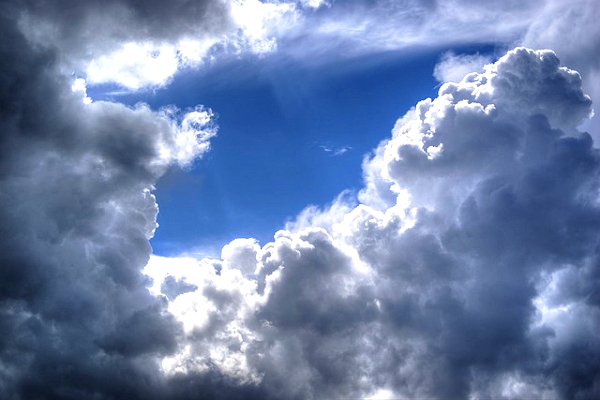
Urban areas may experience different temperatures from surrounding rural regions because roads and buildings absorb and release heat differently. Mountains can force moist air upward, affecting clouds and precipitation. Coastal locations can experience moderating effects from nearby water, while inland areas may have larger temperature variations.
This explains why a forecast for an entire region may not perfectly describe conditions in a specific neighborhood. Local forecasts, observation stations, and radar information can provide more useful detail when conditions are changing quickly.
Weather and the Changing Seasons
Seasonal cycles influence temperature, precipitation, daylight, and atmospheric circulation. The timing and characteristics of seasons differ across the world because of latitude, elevation, geography, and ocean influences.
In tropical areas, seasonal changes may be defined more strongly by rainfall than by temperature. In temperate regions, people often experience clearer transitions between spring, summer, autumn, and winter. Polar regions can experience extreme variations in daylight and temperature throughout the year.
Seasonal expectations are useful for planning, but actual conditions can vary from year to year. A typical seasonal pattern does not mean every day will match the long-term average.
Weather and Climate Are Not the Same
Weather and climate describe atmospheric conditions on different time scales. Weather concerns short-term conditions, while climate refers to long-term patterns and averages observed over extended periods.
For example, a single unusually cold day is an example of weather. A long-term pattern showing that a region normally has hot summers and relatively mild winters is a climate characteristic. Confusing these concepts can make it difficult to understand environmental observations.
Climate information is useful for infrastructure design, agriculture, water management, energy planning, and many other long-term decisions. Weather information, by contrast, is more directly connected to immediate activities.
How Weather Information Supports Daily Decisions
Reliable forecasts can help people decide what to wear, whether to carry rain protection, when to travel, and how to schedule outdoor activities. Farmers can use atmospheric information when planning irrigation, planting, harvesting, and field operations.
Transportation systems also depend heavily on forecasts. Strong winds, heavy precipitation, low visibility, thunderstorms, snow, and icy conditions can affect roads, airports, railways, and shipping routes.
Businesses can also use forecasts for operational planning. Construction projects, outdoor events, tourism services, delivery operations, and renewable energy facilities may all be affected by changing atmospheric conditions.
For everyday planning, useful habits include:
- Check the latest forecast before activities affected by outdoor conditions.
- Look at hourly information when timing is important.
- Pay attention to official warnings during potentially hazardous conditions.
- Compare forecast information with current observations when conditions are changing rapidly.
Severe Conditions and Weather Safety
Some atmospheric events can create significant risks. Thunderstorms may bring lightning, strong winds, heavy rain, or hail. Tropical cyclones can produce powerful winds, intense rainfall, storm surges, and flooding. Winter storms can create snow, freezing conditions, and dangerous travel.
Weather warnings are designed to communicate potential hazards so people can take appropriate precautions. The most useful response depends on the hazard, location, and official guidance.
During severe conditions, people should monitor reliable alerts, avoid unnecessary travel when authorities advise against it, secure loose outdoor objects when appropriate, and keep essential supplies available. Emergency planning is especially important in areas regularly affected by floods, storms, extreme heat, or severe winter conditions.
Technology Is Changing Forecasting
Modern forecasting increasingly depends on advanced computing, remote sensing, high-resolution models, and automated data processing. Satellites can observe atmospheric systems across large areas, while radar provides detailed information about precipitation and storm development.
Artificial intelligence and machine-learning techniques are also being explored and applied in meteorological research and forecasting workflows. These technologies can help identify patterns within large datasets and support faster analysis, although they work alongside established physical models and observations rather than eliminating uncertainty.
Mobile applications and digital dashboards have also made forecast information easier to access. Users can often view temperature trends, precipitation probabilities, wind conditions, radar imagery, and alerts from a single device.
How to Read a Forecast More Effectively
A forecast becomes more useful when several indicators are considered together. Temperature alone does not describe how conditions will feel. Humidity can affect perceived comfort, while wind can make cool conditions feel colder and increase evaporation.
The probability of precipitation also needs careful interpretation. A percentage generally represents the likelihood of measurable precipitation under the forecasting framework being used; it should not automatically be interpreted as the percentage of a city that will receive rain.
Forecast users should also consider the forecast period, update time, and geographic area. A prediction issued several hours ago may differ from a newer update because additional observations have entered the forecasting system.
Conclusion
Weather affects nearly every part of daily life, from transportation and agriculture to personal comfort and outdoor planning. By understanding temperature, humidity, pressure, wind, clouds, and precipitation, people can interpret forecasts more effectively and make better-informed practical decisions.
Modern forecasting combines observations, satellites, radar, computer models, and professional analysis to estimate future atmospheric conditions. Although uncertainty remains, especially farther into the future, regularly updated information can provide valuable guidance. Learning the difference between short-term atmospheric conditions and long-term climate patterns also makes environmental information easier to understand. Whether planning a journey or preparing for severe conditions, using current and reliable weather information is an important part of informed decision-making.