


Introduction
Weather affects nearly every decision people make—from what they wear in the morning to how governments prepare for disasters. Behind these everyday forecasts is a vast scientific system built on data, observation, and advanced computing.
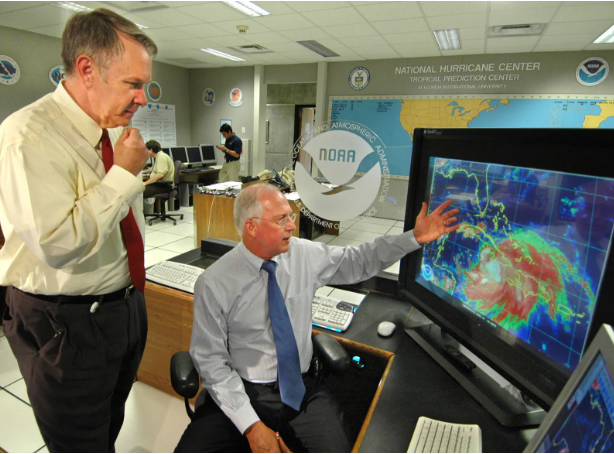
At the center of this system in the United States is the national weather service, which collects, analyzes, and distributes weather information to the public and emergency agencies. Its work ensures that communities receive timely and accurate updates about changing atmospheric conditions.
Weather forecasting is not guesswork. It is a structured process involving physics, mathematics, and computer modeling. Millions of data points are collected every hour from satellites, weather balloons, radar stations, and ground sensors. These inputs are processed to create predictive models that simulate how the atmosphere will behave in the coming hours and days.
What makes this system powerful is its ability to continuously update predictions. As new data arrives, forecasts are refined to improve accuracy and reduce uncertainty.
Why Weather Data Matters in Daily Life
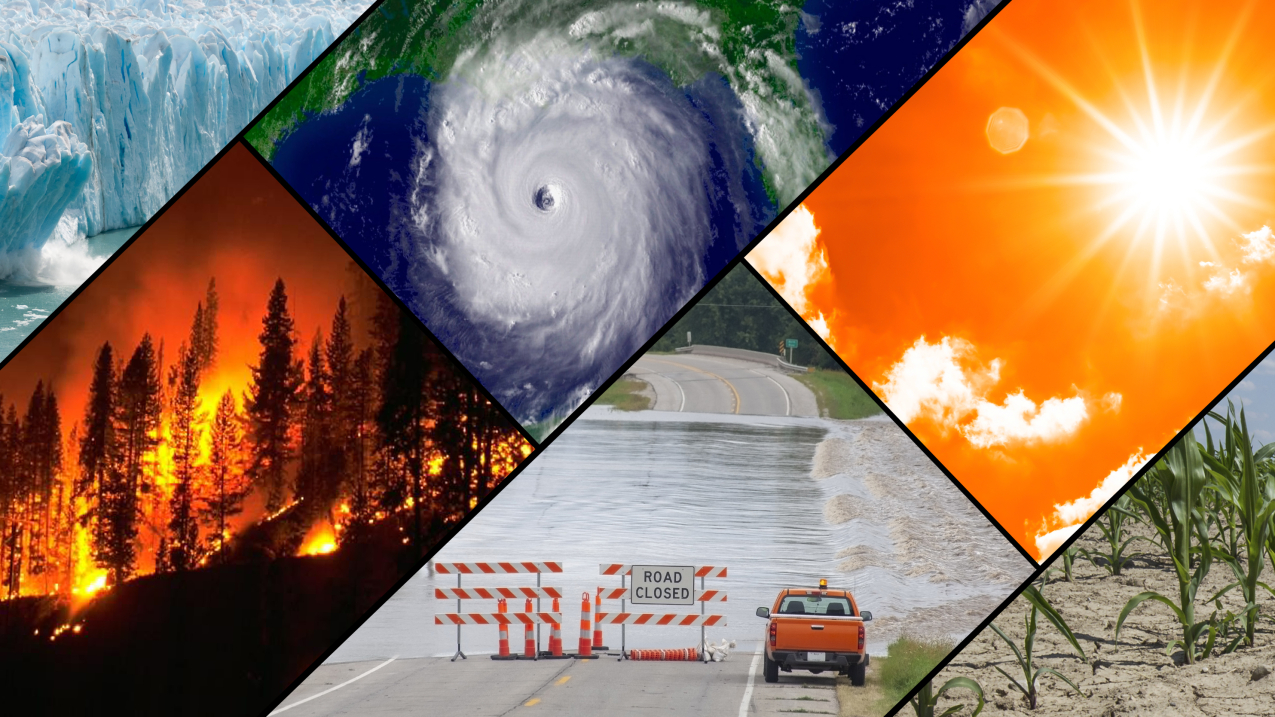
Even simple decisions depend on weather intelligence. Farmers rely on rainfall forecasts to plan irrigation. Airlines depend on wind and storm predictions to ensure safe flights. City planners use long-term weather trends to design infrastructure.
The national weather service plays a critical role in making this information widely accessible. Without it, individuals and industries would face much higher risks and uncertainty.
How Forecasting Systems Are Built and Operate
Modern forecasting is built on a combination of observation networks and computational science. Weather stations across the country continuously measure temperature, humidity, wind speed, and atmospheric pressure.
These measurements are sent to central processing systems where supercomputers run complex simulations. These simulations model the atmosphere using physical laws, such as fluid dynamics and thermodynamics.
The results are then interpreted by meteorologists, who refine forecasts based on experience and regional knowledge.
The national weather service ensures this entire process runs smoothly, coordinating data collection and distribution across multiple platforms.
The Role of Supercomputers in Prediction
Supercomputers are essential in forecasting because the atmosphere is incredibly complex. Even small changes in air pressure or temperature can significantly alter weather patterns.
These machines perform billions of calculations per second, allowing scientists to simulate future atmospheric conditions with increasing accuracy. Without such computational power, modern forecasting would not be possible.
Severe Weather and Public Warning Systems
One of the most important responsibilities of meteorological organizations is issuing warnings for dangerous weather conditions. These warnings help protect lives and reduce property damage.
Storms such as hurricanes, tornadoes, and flash floods can develop quickly, leaving little time for response. Early warning systems are therefore essential for public safety.
The national weather service issues alerts based on real-time data from radar and satellite systems. These alerts are then broadcast through mobile phones, television, radio, and emergency systems.
How Alerts Are Categorized
Weather alerts are structured to help people understand risk levels quickly. A “watch” means conditions are favorable for severe weather. A “warning” means dangerous weather is already happening or imminent.
This clear classification system ensures that people know how urgently they need to act.
Evolution of Weather Prediction Over Time
Weather forecasting has evolved significantly over the past century. Early predictions were based mainly on observation and pattern recognition, which limited accuracy.
With the introduction of satellites in the mid-20th century, forecasting became more precise. Radar technology further improved the ability to track storms in real time.
Today, digital models and artificial intelligence continue to push forecasting accuracy forward.
The national weather service has been at the forefront of this evolution, continuously integrating new technologies into its operations.
From Manual Charts to Digital Models
In the past, meteorologists drew weather maps by hand and relied on sparse data. Now, digital systems automatically generate global weather models every few hours.
This shift has dramatically improved prediction speed and reliability, making forecasts more useful for everyday life.
Technology Powering Modern Forecasting
Modern weather prediction relies on a combination of advanced tools and technologies working together seamlessly.
Satellites provide global coverage, capturing cloud movement and storm development from space. Radar systems track precipitation and storm intensity. Weather balloons measure atmospheric conditions at high altitudes.
All of this data feeds into computational models that simulate the atmosphere in real time.
The national weather service integrates these technologies into a unified forecasting system that delivers continuous updates to the public.
Artificial Intelligence in Weather Science
Artificial intelligence is increasingly being used to improve forecast accuracy. Machine learning algorithms analyze historical weather data to identify patterns that may not be obvious to humans.
These systems can help predict sudden weather changes more quickly, improving early warning capabilities.
Climate Monitoring and Long-Term Trends
Weather forecasting is not only about short-term predictions. Long-term climate analysis is equally important for understanding environmental changes.
Scientists study decades of weather data to identify trends in temperature, rainfall, and extreme weather frequency. These insights help inform policy decisions and disaster planning.
The national weather service contributes significantly to climate monitoring by maintaining extensive historical records and supporting climate research initiatives.
Understanding Climate Change Through Data
Long-term weather data helps scientists understand how climate change is affecting global weather patterns. Rising temperatures, shifting rainfall patterns, and more frequent extreme events are all observable trends.
This information is critical for preparing future generations for environmental challenges.
Emergency Preparedness and Disaster Management
Weather forecasts are essential tools for emergency planning. When severe storms are expected, authorities rely on forecasts to issue evacuation orders and mobilize resources.
Hospitals, schools, and transportation systems all depend on accurate weather information to operate safely during emergencies.
The national weather service works closely with emergency management agencies to ensure timely communication during critical situations.
Coordination During Natural Disasters
During hurricanes or floods, coordination between meteorologists and emergency responders becomes vital. Forecast updates help determine evacuation zones and timing.
This coordination often saves lives by ensuring people are moved out of danger before conditions worsen.
Data Collection Tools and Measurement Systems

Accurate forecasting depends on precise data collection tools. Weather stations across the country record surface conditions, while ocean buoys monitor sea temperatures and wave activity.
Aircraft also collect atmospheric data during flights, providing valuable insights into storm systems.
All of this information contributes to a more complete understanding of weather behavior.
Importance of Ground Stations
Ground stations are essential because they provide localized data that satellites cannot always capture. These stations help refine forecasts for specific regions, improving accuracy at the community level.
Global Cooperation in Weather Science
Weather systems do not stop at national borders. Storms, air currents, and climate patterns move across continents, making international collaboration essential.
Meteorological organizations worldwide share data to improve forecasting accuracy and disaster preparedness.
The national weather service collaborates with global partners to exchange satellite imagery and model data, strengthening worldwide forecasting systems.
Shared Knowledge for Better Forecasts
International cooperation allows scientists to compare data across regions. This helps improve global climate models and enhances understanding of large-scale weather systems.
Table – Key Weather Prediction Tools
| Tool | Purpose | Benefit |
|---|---|---|
| Satellites | Monitor global weather systems | Real-time imaging |
| Radar | Track precipitation and storms | High accuracy storm tracking |
| Supercomputers | Run forecasting models | Predict future conditions |
| Weather Balloons | Measure upper atmosphere | Vertical data collection |
| Ground Stations | Record local conditions | Regional accuracy |
These tools work together to create a complete picture of atmospheric behavior.
Challenges in Weather Prediction
Despite technological advances, forecasting remains challenging. The atmosphere is highly dynamic, and small changes can lead to major differences in outcomes.
Sudden storm formation, limited data in remote regions, and computational limitations still create uncertainty in some forecasts.
The national weather service continues to address these challenges through research, innovation, and improved modeling systems.
The Future of Weather Forecasting
The future of forecasting is expected to become even more precise and personalized. Artificial intelligence, improved satellite systems, and faster computing will enhance prediction accuracy.
Real-time updates will become more detailed, allowing individuals to receive hyper-local forecasts tailored to their exact location.
The national weather service is expected to adopt these innovations to further improve public safety and forecasting reliability.
Smarter and Faster Forecast Systems
Next-generation systems will likely reduce forecast delays and improve storm tracking precision. This will help communities respond faster to severe weather events.
FAQs
What is the main purpose of weather forecasting systems?
They provide predictions and warnings about atmospheric conditions to protect lives and property.
How accurate are modern weather forecasts?
Short-term forecasts are highly accurate, while long-term forecasts become less certain due to atmospheric complexity.
How do weather warnings help people?
They provide early alerts about dangerous conditions, allowing time for preparation and evacuation.
What technologies are used in forecasting?
Satellites, radar systems, supercomputers, and ground stations all contribute to modern forecasting.
Why is climate data important?
It helps scientists understand long-term environmental changes and prepare for future risks.
Conclusion – Why Weather Awareness Matters
Weather affects every aspect of human life, from daily routines to large-scale disaster planning. Accurate forecasting systems help reduce risks, protect infrastructure, and save lives.
The national weather service plays a central role in this system by providing reliable forecasts, issuing timely warnings, and supporting climate research. Its work ensures that individuals, businesses, and governments can make informed decisions based on accurate data.
As technology continues to improve, weather forecasting will become even more precise and responsive. Staying informed and paying attention to official updates will always remain one of the most effective ways to stay safe in an unpredictable world.